2-cyc cache
Table of Contents
Dual-fetch test
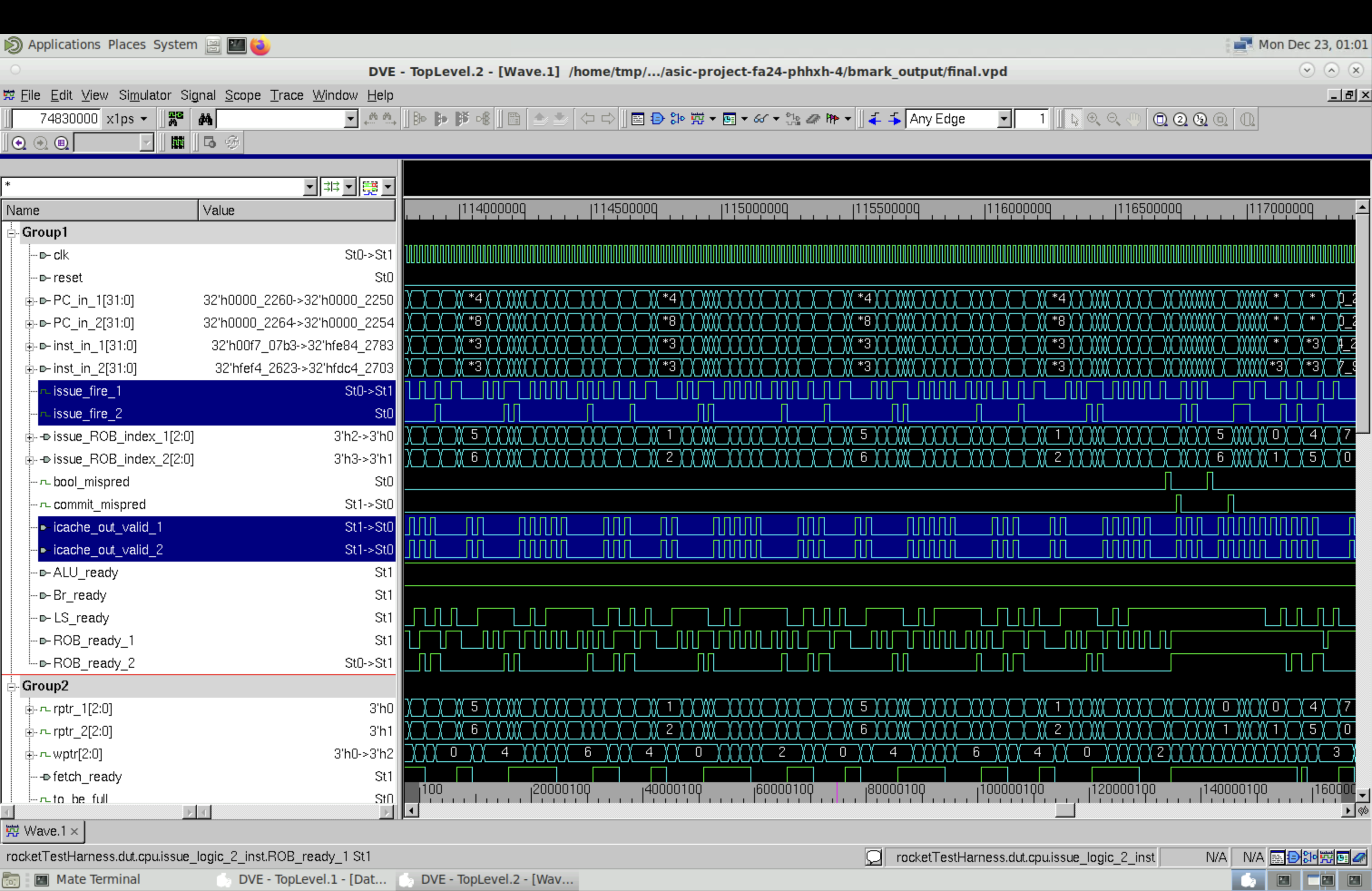
Using the “final” benchmark as an example, we looked at the waveform and clearly identified dual-fetch pattern. The screenshots are stored here. Below shows a zoomed-in waveform. icache_out_valid_1 and icache_out_valid_2 are the two output valid signals from icache. They can be high in the same cycle.
Benchmarks (sim-rtl)
Direct-mapped cache
The total number of cycles to run all benchmarks is 50,194,333. Compared to the single-fetch 2-cyc frontend, the number of cycles is reduced by 13%.

Post-PAR
Post-PAR results are NOT up-to-date with the design, but changes are small and won’t affect the overall picture. PAR documents are stored here.
Direct-mapped cache
Because 2-way set associative cache doesn’t offer better performance for benchmarks, we only PARed direct-mapped cache. We are able to get 9.75ns clock period after PAR. Compared to the single-fetch cpu (main branch), the clock period increased by 0.7ns. The timing report is here. The total time required for running all benchmarks is:
T_{total} = \sum N_{cycles} \times T_{clock} = 50,194,333 \times 9.75ns= 0.489s
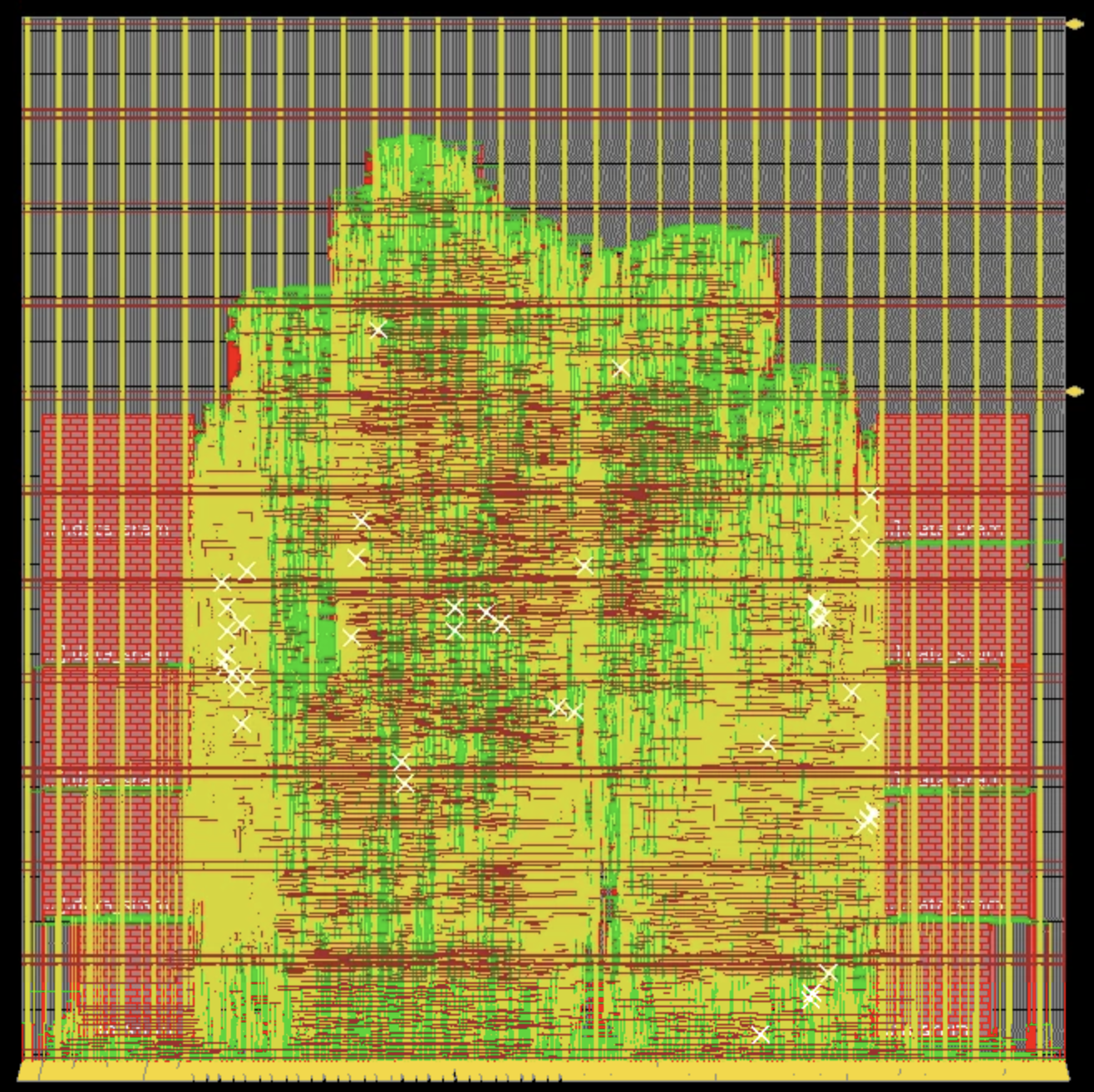
Compared to the single-fetch 2-cyc cache version, the total time is reduced by 0.035s. Below is the screenshot of the floorplan.